There doesn't seem to be a bigger booster of Sedges in the gardening world than Roy Diblik from Northwind Perennial Farm. He's actually where I've 'gotten to know' anything about sedges. From his YouTube videos. He posted a short video where he named his '3 favorite Carex' (embeded below), where he detailed what he likes about all three - bromoides, muehlenbergii & muskingumensis.
Well...that means I have to try ALL of them, right? I'm starting with one of them:
. Below is the sign from Roy's nursery.
The description on the sign reads: Too nice, a good looking soft foliage grass-like plant that adds contrast to all types of shade plantings. What's not to like?
He talks about combining these sedges into a pattern. Run a group of Bromoides with islands of 'Little Midge'. And fields of Pensylvanica with islands of Carex muskingumensis.
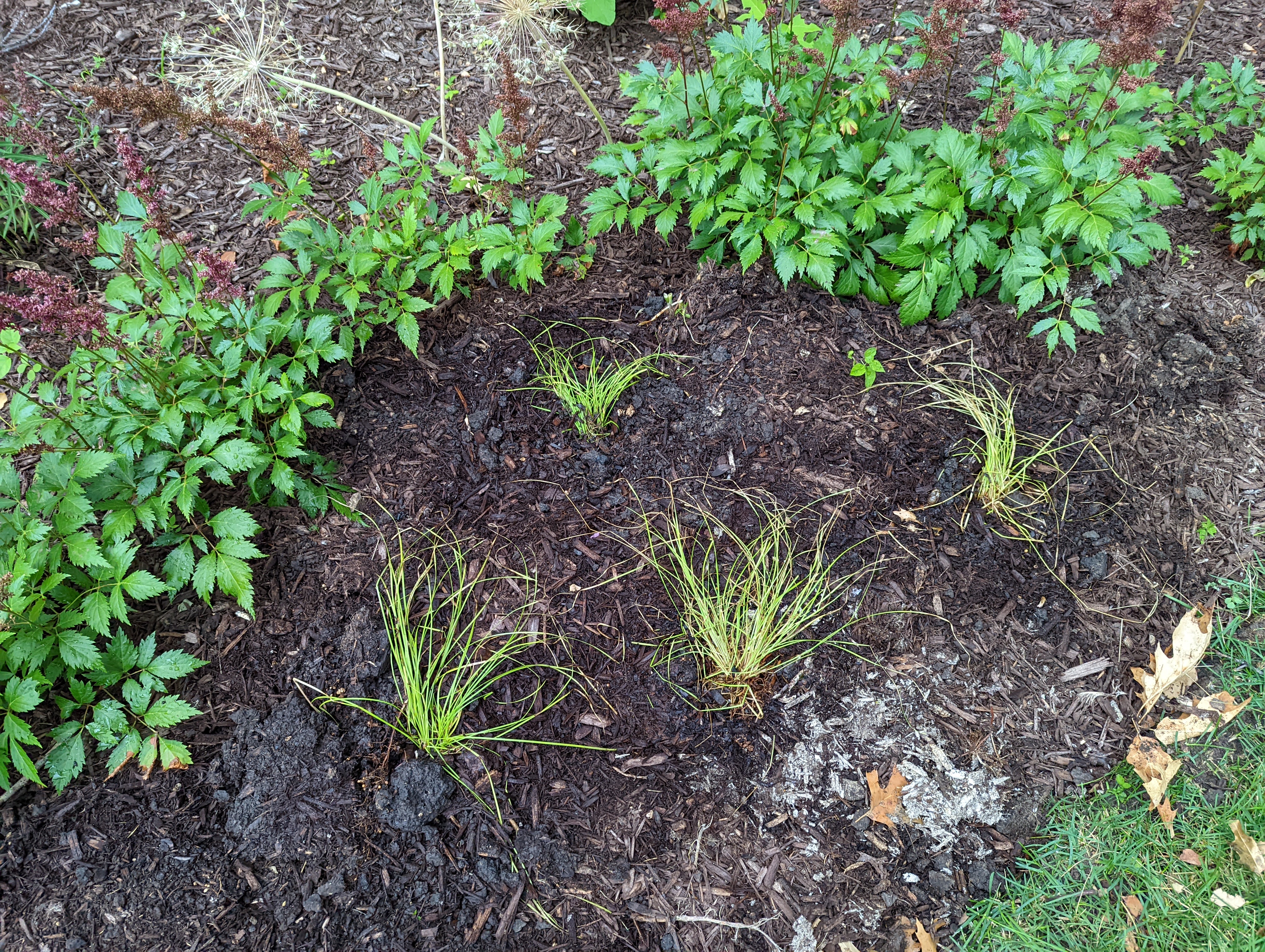
I decided to start out with four small Bromoides. Here, below is one of them - this is the same photo from the top of the post.
One of the big differences between the Pennsylvanica and Bromoides is dry vs moist soil. I'm trying them in different spots and going to see how they react. I decided to use these Carex Bromoides in a little nook in front of the Fanal Astilbes in the south beds in the backyard. I'll keep the watered and see how they do. See below for the drift of four Carex Bromoides.
Is this 'enough' for the year? I don't think so. Six plantings of ground cover for the year. I'd say I would get an 'incomplete' as of now. 10 more sedges? Then we're talking.
But, where do they need to go? A few places:
1. Out front under the Norway Maple.
2. Around the Firepit area.
3. In the way back where nothing is growing.
4. Under the Frans Fontaine Hornbeams.
That last one feels like a good excuse to buy 10 more. So does the firepit area.
First the Hornbeams. It is low-lying, so more 'wet' than dry. A mix of Bromoides with some 'Little Midge' mixed in feels right.
Firepit is more dry. That's Pennsylvanica and Muskingumensis. Ten or so 'plugs' would go a long way back there, too.
That's a look *up* from the ground through a young, skinny tree limb as well as a larger, more mature (and confirmed) Black Walnut tree. The leaves, from a distance look similar. Back last year, I mentioned that I wanted to try to identify if a couple of young trees were worth keeping or if I should remove them. And, knowing that I wanted to hold myself accountable, I included it as #15 on my to-do list for the yard this year . After poking around on the web in various places , I think I've settled on this clear cut detail that I found on r/WhatIsThisPlant on Reddit : Walnut tree leaves have no notches. Tree of Heaven (an invasive tree), do. From u/blacksheep998 : Ailanthus has a small notch at the base of it's leaflets. Black walnut leaflets, while slightly toothed, lacked that distinctive nub. So, that's first thing to check: Does the little tree leaves have those 'thumbs' or notches? *Looks closer*... Sure, enough....
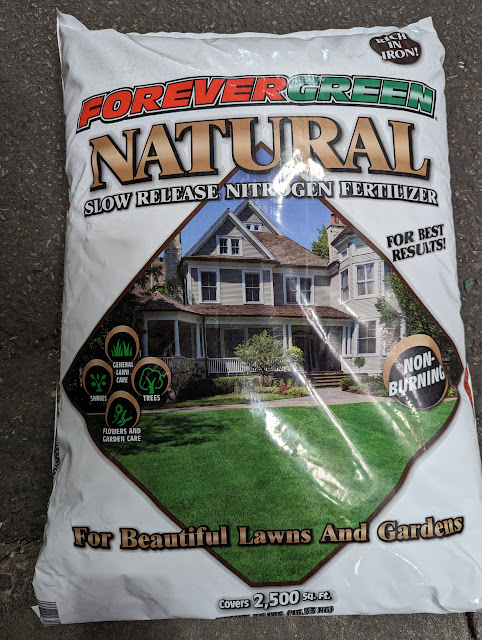
We were at the Menards in Bolingbrook and wandered out to where they keep the bags of lawn fertilizer. I was hoping to pick up a few bags of fertilizer and pre-emergent that I could put down late this Winter/early this Spring. As I've talked about over the years, I've evolved in my approach to feeding our lawn. When I started....I was all synthetic. I used the four-step program - all synthetics and some with weed/feed combined. Then...my eyes were opened (thanks to YouTube) on organics. Specifically Milorganite. I started to use biosolids. And, I stopped early Spring feedings. And, did a late season (Thanksgiving) feeding. And 'spoon fed' during the warm months and all of those things that people talk about online. Starting last year, I've kind of swung back on the synthetic --> organic spectrum. But, only half-way. I'll post about what I'm doing with the first application in another post....
September is a good time to divide some perennials in our growing zone - 5b - due to the cooler temperatures, the little bit of rain we get and the warm soil temperatures. I have a few plants in our garden that were planted in 2017 that haven't been divided to date - so that's five growing seasons without dividing. And, when it comes to some ornamental grasses, it seems that they do BEST when you divide them every three or four years. My Fall dividing plan starts with these Karl Foerster grasses that were planted next to our driveway and our front way. I just posted a photo of these grasses last week showing the trio of them being full and wide . That's about their total, mature size. Coupled with the fact that I noticed some 'center rot' this Spring , I knew it was time to dig these out and divide. I started with the grass closest to our garage - you can see it on the right in the photo below: I dug it up and divided it into quarter...




Comments
Post a Comment
Be nice to each other here.